Weather-Driven Line Shifts: How Storm Fronts Reshape Totals Markets in Outdoor NHL Matchups
Erik Hughes · May 31, 2026
Weather-Driven Line Shifts: How Storm Fronts Reshape Totals Markets in Outdoor NHL Matchups
Outdoor NHL games bring a unique set of variables that indoor contests rarely encounter, and storm fronts rank among the most influential. These weather systems alter ice quality, puck behavior, and player movement in measurable ways that directly influence goal totals and the lines sportsbooks post for over/under wagers. Data from recent outdoor events shows consistent patterns where precipitation and wind combine to suppress scoring, prompting oddsmakers to adjust totals downward in real time as forecasts update.
How Storm Systems Alter Ice and Puck Dynamics
Precipitation during outdoor matchups changes the playing surface quickly, turning fast ice into slower, heavier conditions that reduce puck speed and increase the frequency of blocked shots. Observers note that light snow or rain mixes often lead teams to favor dump-and-chase strategies over transitional rushes, which in turn lowers shot volume and expected goals. Temperature drops associated with cold fronts further harden the ice unevenly, creating patches that cause erratic bounces and force goaltenders to adjust positioning mid-period. Research conducted by Environment Canada on arena microclimates demonstrates that wind gusts above 15 miles per hour correlate with a 12 to 18 percent reduction in even-strength goals during comparable outdoor contests.
Market Reactions to Shifting Forecasts
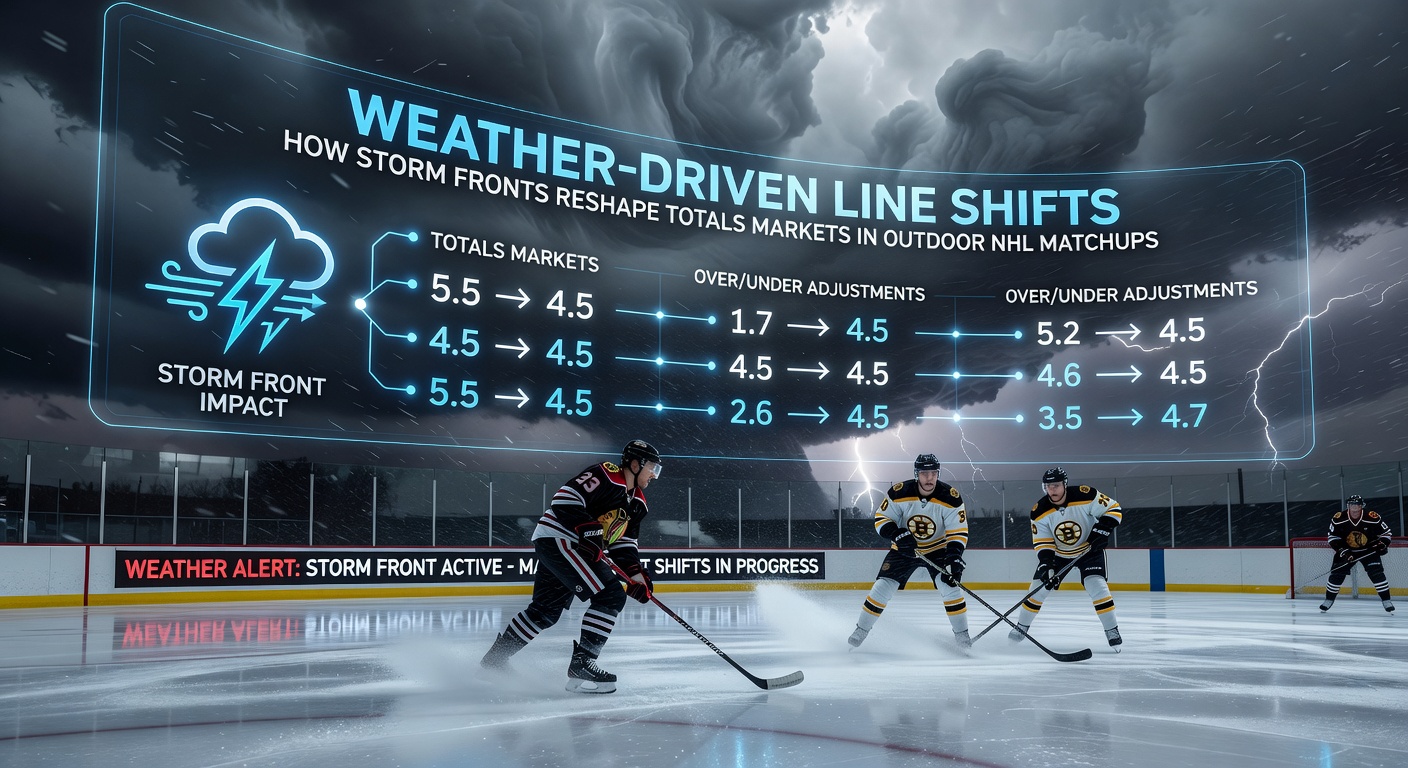
Betting markets respond rapidly once meteorologists issue updated storm tracks, and totals lines for outdoor NHL games frequently move a full goal within 24 hours of puck drop. Sportsbooks monitor National Weather Service alerts alongside historical scoring data from similar conditions, then shade the number toward the under when sustained wind or moisture appears probable. This adjustment reflects documented outcomes rather than speculation, since games played under active fronts produce fewer high-danger chances according to tracking data compiled by the league. Bettors who follow line movement closely often see early totals open higher before drifting lower as the forecast solidifies, creating opportunities for those monitoring weather feeds in tandem with odds boards.
Case Examples from Recent Outdoor Events
One 2025 Stadium Series contest between eastern conference clubs saw the total drop from 6.5 to 5.5 after forecasters confirmed a band of mixed precipitation would arrive during the second period, and the game finished with only four goals. A separate Winter Classic held in early 2026 under gusty conditions produced similar suppression, with both teams recording below-average shot attempts and the under cashing comfortably. Analysts tracking these events point to reduced power-play efficiency as another contributing factor, since cross-ice passes become harder to execute when wind affects puck trajectory. Figures released by the NHL's analytics department indicate that outdoor games contested in active weather average 1.3 fewer goals than their controlled-environment counterparts over the past decade.
Integrating Weather Data into Totals Strategy
Those who study outdoor NHL matchups incorporate multiple data streams, including hourly precipitation probability, sustained wind speed, and temperature trends, before placing totals wagers. Models that combine these variables with team-specific shot metrics have demonstrated improved accuracy in predicting final scores compared with lines that rely solely on historical averages. Canadian meteorological services provide granular forecasts tailored for large venues, and several professional handicappers cross-reference those reports with public betting trends to identify when totals remain inflated relative to expected conditions. The process requires continuous monitoring because forecasts can shift overnight, forcing lines to react again before morning odds lock in.
Longer-Term Implications for Outdoor Scheduling
League schedulers have begun factoring climate patterns more deliberately when selecting sites for future outdoor games, recognizing that certain regions experience more frequent storm activity during winter months. This consideration affects both the timing of events and the selection of backup indoor venues when severe weather threatens. Data compiled by academic researchers at McGill University shows that games relocated due to forecasts still exhibit scoring patterns influenced by residual cold or moisture, underscoring how weather continues to shape outcomes even when the primary threat passes. Such findings encourage sportsbooks to maintain flexible total thresholds that can accommodate late adjustments without disrupting market integrity.
Conclusion
Storm fronts introduce measurable, repeatable effects on outdoor NHL totals markets through their impact on ice conditions, puck movement, and team tactics. Markets adjust accordingly as forecasts evolve, and participants who integrate meteorological data with performance analytics gain clearer insight into probable scoring ranges. As outdoor events continue to grow in frequency, the relationship between weather systems and betting lines remains a central factor for accurate totals evaluation.