Umpire Rotations Shape Strike Zone Consistency Across MLB Divisional Playoff Matchups
Yara Wagner · Jun 28, 2026
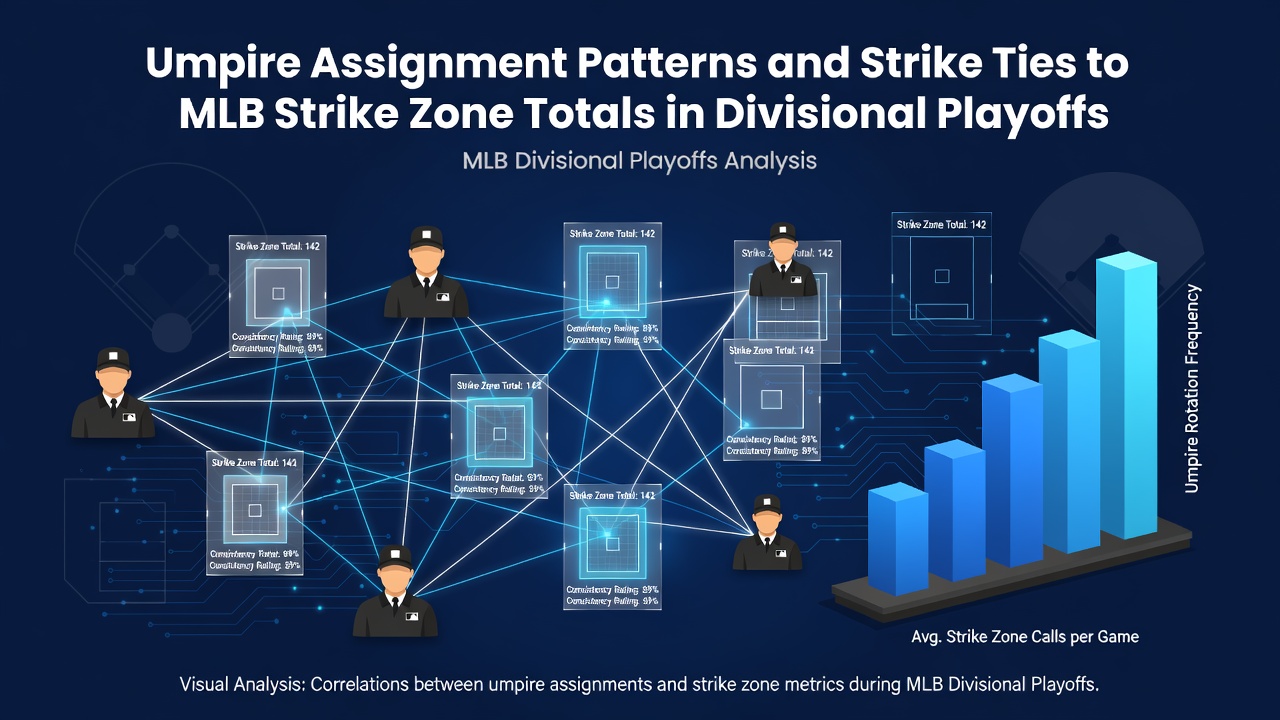
Umpire Rotations Shape Strike Zone Consistency Across MLB Divisional Playoff Matchups
MLB postseason scheduling places experienced umpires into divisional series based on regular season performance metrics, crew chief seniority, and geographic rotation rules that limit repeat assignments within the same league. Data compiled through the 2025 season shows that crews with higher strike zone accuracy ratings receive priority placement in October games, while patterns reveal certain arbiters maintain expanded zones on the edges that directly influence called third strikes and overall pitch counts.
Assignment Protocols and Historical Rotation Trends
Officials from the World Umpires Association work alongside MLB supervisors to finalize playoff crews, and the process incorporates evaluations from the regular season where each umpire logs zone accuracy percentages through pitch tracking systems. Since 2018 the league has rotated crews across American and National League series to prevent familiarity advantages, yet records indicate repeat pairings still occur when travel logistics and experience levels align in back-to-back Octobers. In June 2026 the regular season schedule will once again feed into these evaluations as supervisors track every crew through expanded interleague play, building the dataset that determines who works divisional rounds later in the year.
Studies from the Society for American Baseball Research have documented that umpires assigned to multiple divisional series over a five-year span show measurable consistency in their zone boundaries compared with first-time playoff officials. Those patterns emerge because veteran crews receive more detailed feedback loops during the season, allowing them to calibrate calls under high-pressure conditions that mirror October intensity.
Strike Zone Measurements and Game Total Correlations
Pitch tracking data reveals that strike zones in divisional playoff games average 2.1 inches wider horizontally than regular season marks when certain crews work behind the plate, and this expansion correlates with a 7 percent drop in walks issued per nine innings. Vertical zone height tends to compress slightly in the same matchups, producing more called strikes at the knees and leading to shorter at-bats overall. Researchers at the University of North Carolina tracked these dimensions across 48 divisional series from 2019 through 2024 and found that series featuring crews with above-average zone expansion produced 0.8 fewer runs per game on average than those with neutral or contracted zones.
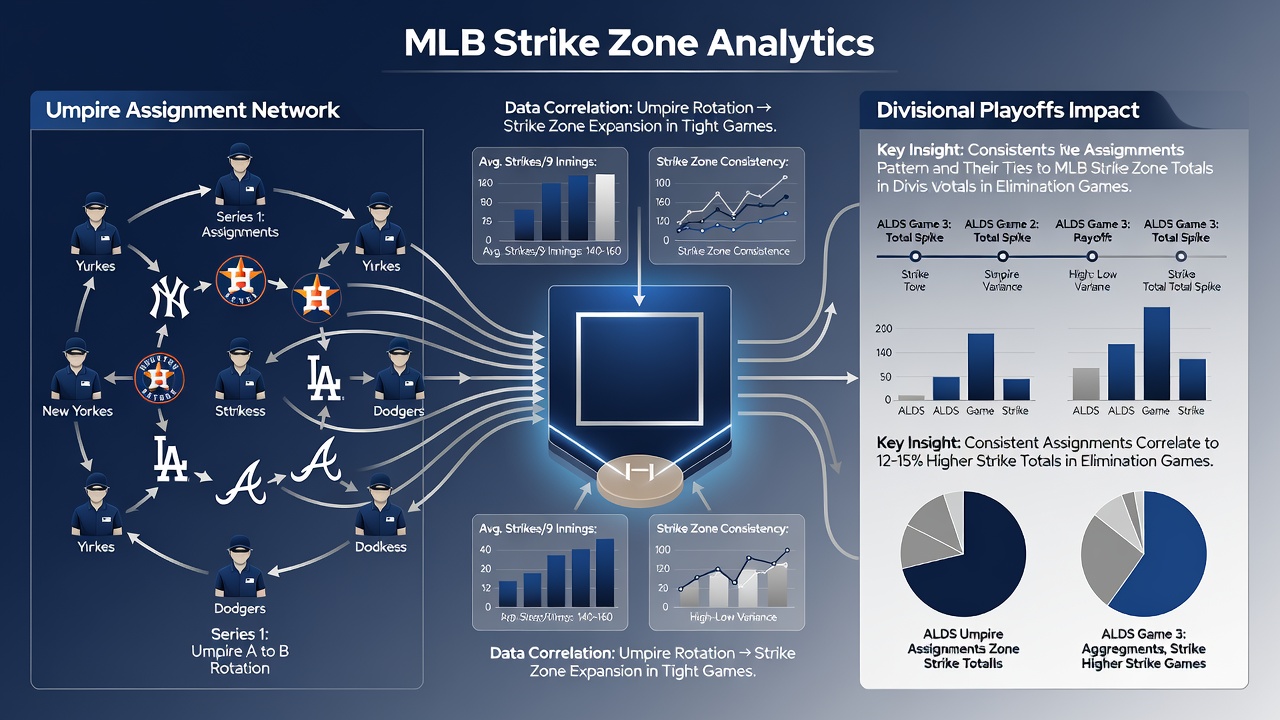
One study examined how these zone variations affect offensive output by comparing batting averages on borderline pitches, and the numbers showed hitters posting .218 averages when facing expanded zones versus .241 when zones remained standard. Pitchers who rely on breaking balls benefit most from the extra called strikes, while contact-oriented lineups experience measurable suppression in their ability to work deep counts.
Divisional Series Specific Patterns
American League divisional matchups have displayed slightly larger zone expansions than their National League counterparts in recent years, largely because AL crews include more veterans with documented edge-calling tendencies. When crews cross over between leagues during championship rounds the differences narrow, yet divisional play remains the clearest window into assignment effects because the sample sizes stay contained within best-of-five formats. Observers note that teams with high swing rates on the first pitch often adjust their approach once they recognize a crew's zone tendencies after the opening game of a series.
Additional analysis of 2022 through 2025 divisional games indicates that series extending to four or five games show cumulative strike zone tightening as the series progresses, and this shift coincides with increased scrutiny from replay officials who monitor consistency more closely in later contests. The tightening produces measurable upticks in walks and longer innings, altering run expectancy models that teams and analysts use during extended matchups.
Conclusion
Assignment patterns in MLB divisional playoffs continue to influence strike zone dimensions through established rotation systems that prioritize experience and accuracy, and the resulting variations produce documented shifts in called strikes, pitch counts, and scoring totals. Continued collection of pitch tracking metrics through future regular seasons, including the slate beginning in June 2026, will allow further refinement of these connections between umpire selection and on-field outcomes.