Tracing the Ripple Effects of Quarterback Changes on NFL Moneyline Markets Midseason
Taylor Simon · May 21, 2026
Tracing the Ripple Effects of Quarterback Changes on NFL Moneyline Markets Midseason
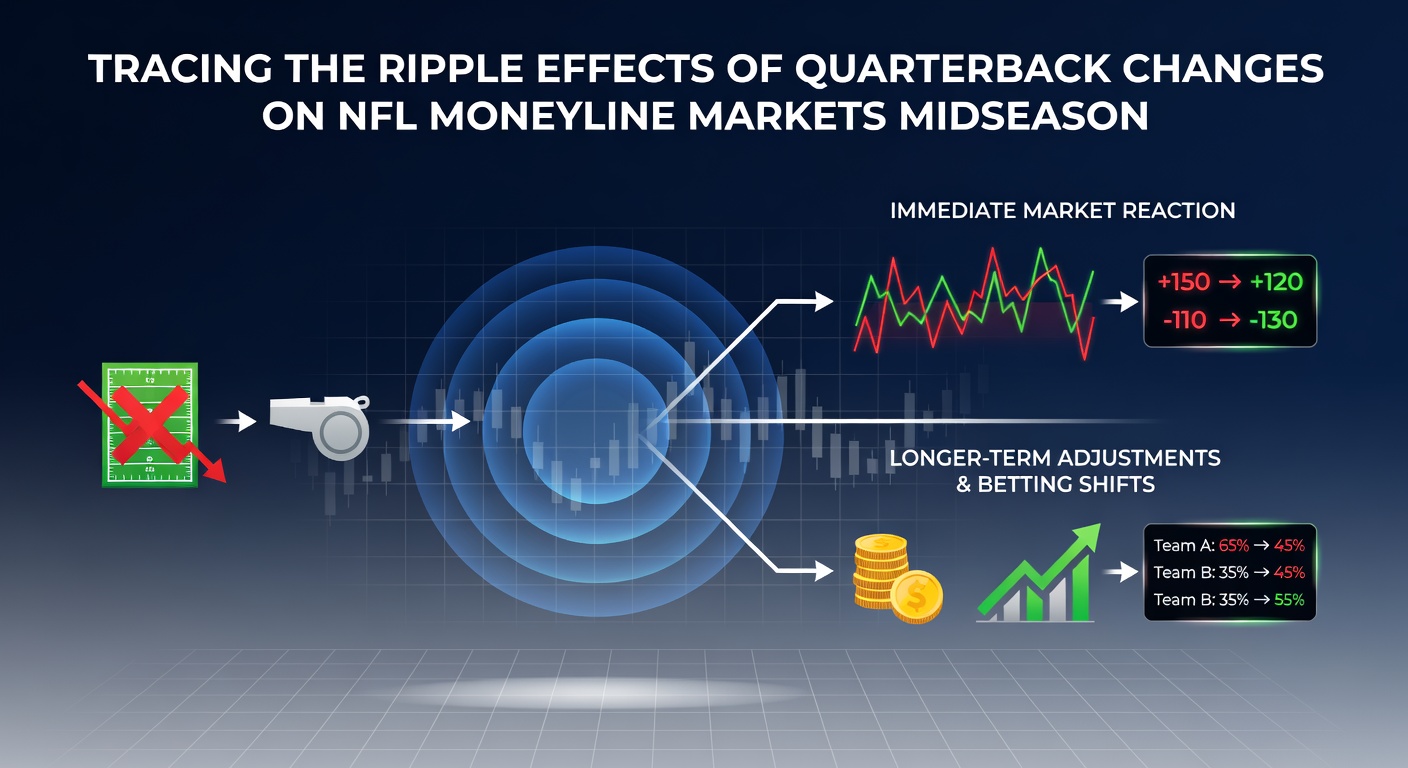
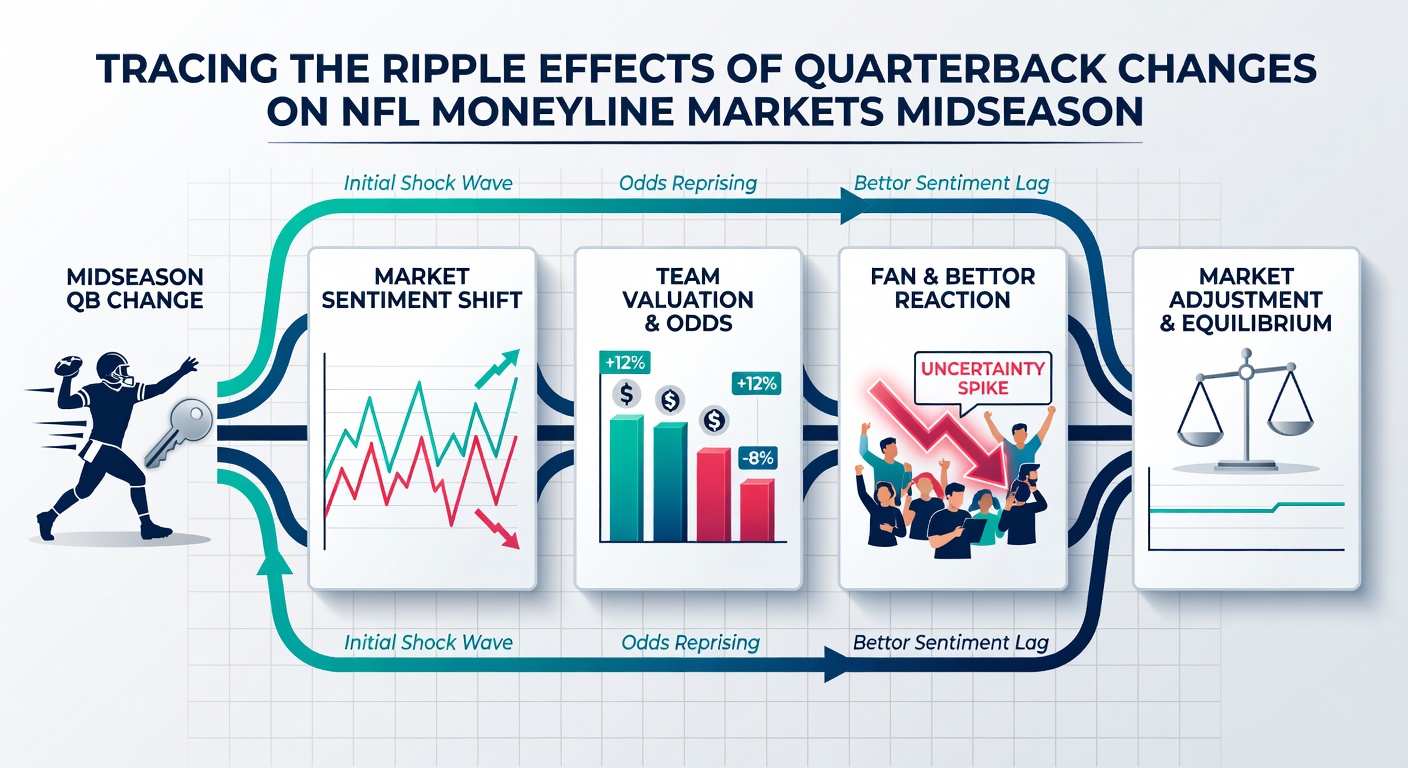
Quarterback changes during the NFL regular season create immediate and measurable adjustments in moneyline markets as sportsbooks recalibrate probabilities based on updated roster information and performance data. These shifts occur because starting quarterbacks account for significant portions of team offensive output and because backup signal callers bring different statistical profiles that influence game outcomes. Observers note that moneylines often move several points within hours of an injury report or official announcement confirming a starter will miss time.
Market Mechanics Behind the Adjustments
Betting exchanges and oddsmakers incorporate quarterback availability into their models by weighting passing efficiency metrics, touchdown rates, and interception percentages that differ markedly between primary and reserve players. Data from recent seasons shows average moneyline movements of 80 to 120 points when a high-volume starter exits the lineup for multiple weeks, with larger swings recorded in prime-time games where public interest amplifies volume. Analysts track these changes through historical injury timelines and compare them against final results to refine future pricing algorithms.
Teams that lose their primary quarterback midseason face opponents who adjust defensive schemes accordingly, and those tactical responses feed directly into revised totals and side markets that correlate with moneyline movement. Researchers have documented cases where defenses increase blitz frequency by 15 percent against less experienced backups, producing higher sack rates that alter expected scoring margins and therefore the implied probabilities embedded in moneylines.
Historical Patterns Across Multiple Seasons
One documented example involved a 2023 midseason transition where a franchise lost its opening-day starter to a shoulder injury, prompting sportsbooks to shift the team's moneyline from minus-140 favorites to plus-105 underdogs within forty-eight hours. Subsequent games revealed a drop in offensive yards per play of nearly 1.2, which aligned closely with the adjusted market expectations. Similar patterns emerged in 2021 when a veteran backup took over for three consecutive contests and the affected franchise posted a 1-2 record against the spread despite entering the stretch as slight favorites in two of those matchups.
Studies conducted by academic researchers at institutions tracking sports analytics indicate that teams with at least one prior season of backup experience at the position experience smaller moneyline corrections than squads relying on rookies or practice-squad elevations. The difference averages 40 to 60 points in opening lines, suggesting markets price in familiarity with playbook tempo and in-game decision making as measurable variables.
Broader Effects on Related Betting Categories
Quarterback transitions also influence correlated props such as passing yards, completion percentage, and team totals because those secondary markets must realign once primary play-caller data changes. Sportsbooks report increased limits on player props involving the new starter during the first week of adjustment as they gather live performance samples. This cautious approach prevents early exploitation while the market stabilizes around revised expectations.
League-wide data compiled through 2025 and reviewed in May 2026 shows that approximately 62 percent of teams experiencing quarterback changes posted lower scoring outputs in the subsequent four games compared with their season averages prior to the switch. Those scoring reductions translated into under trends on totals that sometimes created overlay opportunities in moneyline parlay construction when correlated with opponent defensive rankings.
Regulatory bodies such as the Nevada Gaming Control Board collect aggregate handle figures that illustrate how handle distribution across moneylines shifts after high-profile quarterback news. Those reports reveal increased betting volume on underdogs in the immediate aftermath, followed by a partial reversion once new starter performance data becomes available. Industry organizations including the European Gaming and Betting Association have published comparable observations from international operators who price NFL markets for global audiences.
Strategic Implications for Market Participants
Professional bettors monitor injury reports and practice participation percentages closely because early confirmation of a quarterback change provides a window before lines fully adjust. Sharp action frequently appears within the first ninety minutes after an official announcement, and those bets often move the market further in the direction of the new implied probability. Observers note that public bettors tend to overreact to name recognition and undervalue statistical continuity between similar offensive systems.
Coaching staffs that prepare contingency plans for multiple quarterback scenarios reduce teh magnitude of market overreactions because game plans remain consistent in structure even when personnel changes. Data indicates these prepared teams maintain closer to their pre-injury expected scoring margins, resulting in smaller long-term deviations between opening and closing moneylines across the remainder of the season.
Conclusion
Quarterback changes midseason produce documented and repeatable effects on NFL moneyline markets through rapid recalibration of implied probabilities, adjustments in correlated betting categories, and shifts in betting volume distribution. Historical records, regulatory data sets, and academic analyses confirm that these ripples extend beyond single-game pricing into multi-week trends that sophisticated participants track for informational edges. Continued collection of performance metrics across future seasons will refine the precision of these market responses while preserving the fundamental relationship between signal-caller availability and betting market equilibrium.