Strategic Player Rest and Its Documented Impact on NBA Scoring Totals in the Season's Closing Weeks
Carlo Albrecht · Aug 4, 2026
Strategic Player Rest and Its Documented Impact on NBA Scoring Totals in the Season's Closing Weeks
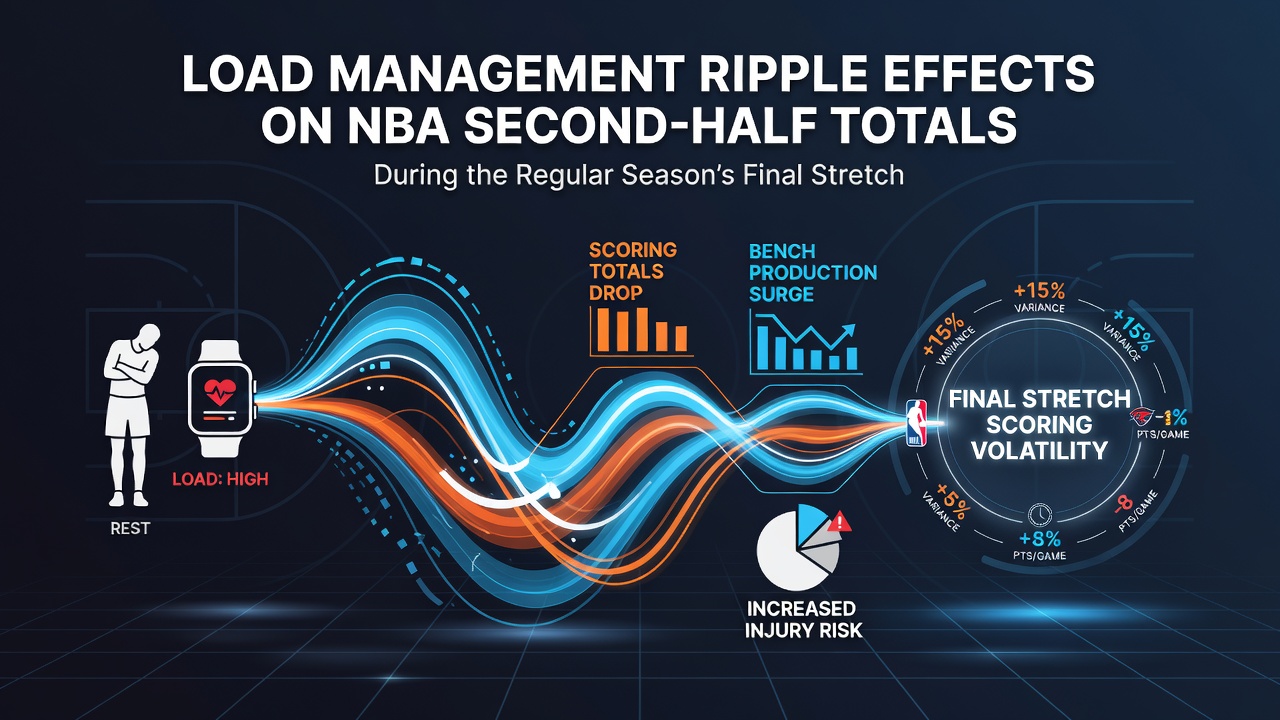
Load management practices have shaped NBA regular season outcomes for years, with teams resting key players during the final stretch to preserve health for playoffs. Data from multiple seasons shows these decisions often alter second-half scoring patterns, particularly in games played from March through April. Teams reduce minutes for stars, which shifts offensive and defensive efficiencies in measurable ways.
Patterns in Late-Season Scheduling and Rest Decisions
Coaches and front offices coordinate rest schedules around back-to-back sets and long road trips. Records indicate that squads with secured playoff positions rest players more frequently after mid-March, while those fighting for seeds maintain fuller rotations. This creates measurable differences in team totals, as second units handle larger shares of minutes during the final 20 games of the regular season.
Figures from the 2024-2025 campaign revealed that teams resting at least two starters per game posted second-half point averages 4.2 points lower than their season norms. Similar trends appeared in earlier years when data tracking became more granular. Observers note that defensive schemes also simplify when veteran players sit, which can elevate opponent efficiency ratings in the third and fourth quarters.
Effects on Over/Under Markets and Second-Half Totals
Betting markets adjust lines when load management announcements surface, yet second-half totals often diverge from pre-game projections. Research from university sports analytics programs demonstrates that rested lineups produce fewer transition opportunities, which reduces overall possessions and points scored after halftime. One study covering five seasons found a 6.8 percent drop in second-half points per game when multiple starters logged under 20 minutes.
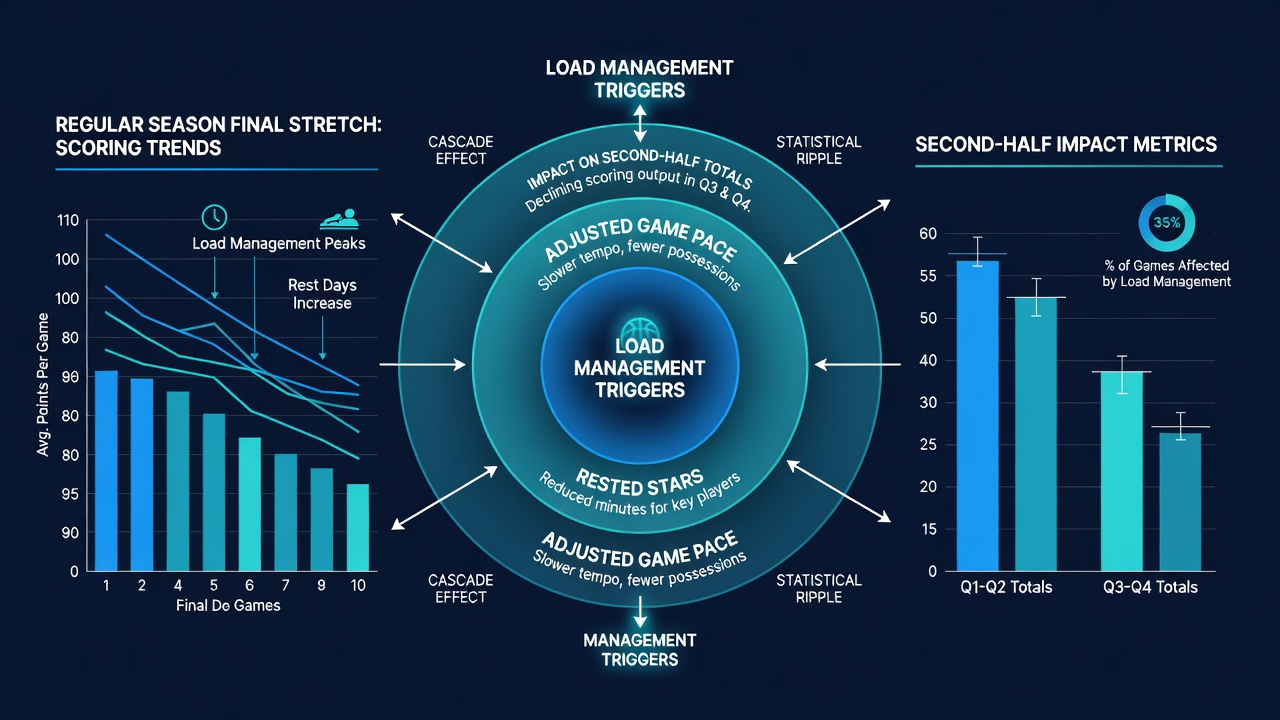
What's interesting is how these adjustments compound across consecutive games. When a team rests players on a Monday and plays again Wednesday, the second game frequently sees elevated totals as depth players push harder for minutes. Data compiled through league tracking systems shows this rebound effect appears most consistently in home contests during the final three weeks of the regular season.
Travel and Congestion Factors Interacting with Rest
Longer road trips in March and April amplify the need for rest, yet they also create scenarios where second-half totals move in unexpected directions. Teams returning from extended travel sometimes maintain higher energy levels in later quarters because starters enter later or play reduced minutes from the start. League records indicate that games involving at least one team on a three-game road swing produce second-half overs at a slightly higher rate than the league average.
August 2026 planning sessions among team medical staffs already incorporate these historical patterns when mapping out the 2026-2027 schedule. Analysts review prior seasons to identify clusters of games where load management produced the largest deviations in scoring totals, allowing organizations to fine-tune rest protocols before training camp begins.
Position-Specific Data and Scoring Shifts
Big men and perimeter players experience different rest impacts. Centers who sit out generate fewer second-chance points, while guard rotations without primary creators post lower assist rates after halftime. Aggregated statistics across the league show that second-half three-point attempts decline by an average of 3.1 per team when two or more starters receive rest. These shifts directly influence totals markets that focus on combined scoring rather than individual props.
Teams with strong benches sometimes mitigate these effects, maintaining closer to season averages in second-half output. Yet league-wide figures reveal that most clubs see measurable drops when star players exit early or sit entirely during the final stretch.
Conclusion
Load management continues to influence NBA second-half totals through documented changes in minutes distribution, efficiency, adn possession rates. Data collected over recent seasons provides clear evidence that these practices produce consistent patterns in scoring during the regular season's closing weeks. Teams, analysts, and market participants track these trends as they prepare for the unique dynamics of late-season play.