NBA Road Trip Fatigue and Its Effect on Underdog Lines in Multi-Game Series
Yara Wagner · May 28, 2026
NBA Road Trip Fatigue and Its Effect on Underdog Lines in Multi-Game Series
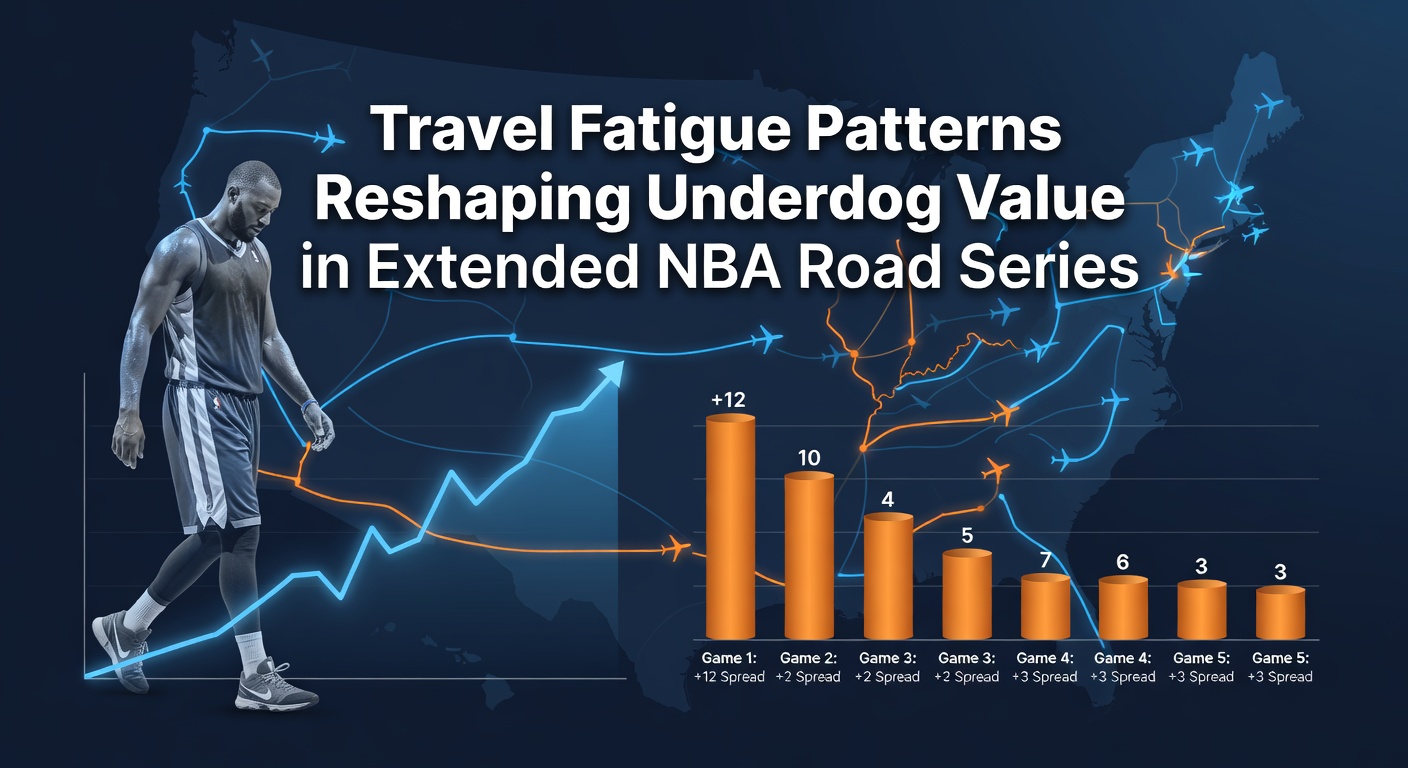
Extended NBA road series create distinct fatigue patterns that reshape underdog value across betting markets, and data from recent seasons shows how these effects compound over consecutive games away from home. Teams logging multiple time zone shifts or back-to-back flights often see measurable drops in defensive efficiency and shooting percentages, while opponents at home maintain steadier output. Researchers tracking player tracking data have noted that these declines become more pronounced after the third game in a road set, altering point spreads and moneyline odds in ways that reward careful analysis of schedule density.
Mapping Fatigue Through Schedule and Performance Metrics
League schedules place certain clubs on grueling stretches that combine long flights with limited recovery windows, and performance databases reveal consistent trends in how these trips influence game totals. During May 2026 playoff series, several Western Conference matchups featured road teams crossing multiple zones within short spans, leading to elevated turnover rates and reduced three-point accuracy after game four. Studies from sports science departments at institutions like the University of Waterloo have quantified how cumulative sleep disruption correlates with slower reaction times on defense, providing objective benchmarks that betting models incorporate when setting adjusted lines.
Those who examine box scores across multi-game trips find that road underdogs cover spreads at higher rates in later contests, particularly when the home side has enjoyed extra rest days between games. This pattern emerges because fatigue manifests gradually rather than immediately, allowing early games in a series to mask underlying wear before it surfaces in fourth quarters and overtime situations. Figures from league-wide tracking systems indicate that teams on five-plus game road swings post lower assist-to-turnover ratios, which directly feeds into totals betting and live odds adjustments.
Betting Market Adjustments and Underdog Opportunities
Oddsmakers integrate travel data into their algorithms, yet residual value often remains for underdogs in extended series because public perception lags behind granular metrics. Road teams facing compressed itineraries show elevated underdog win probabilities in games five through seven, according to historical series data compiled by independent analytics groups. These shifts occur as home favorites see their margins compress when facing opponents who have adapted to arena conditions despite the accumulated miles.
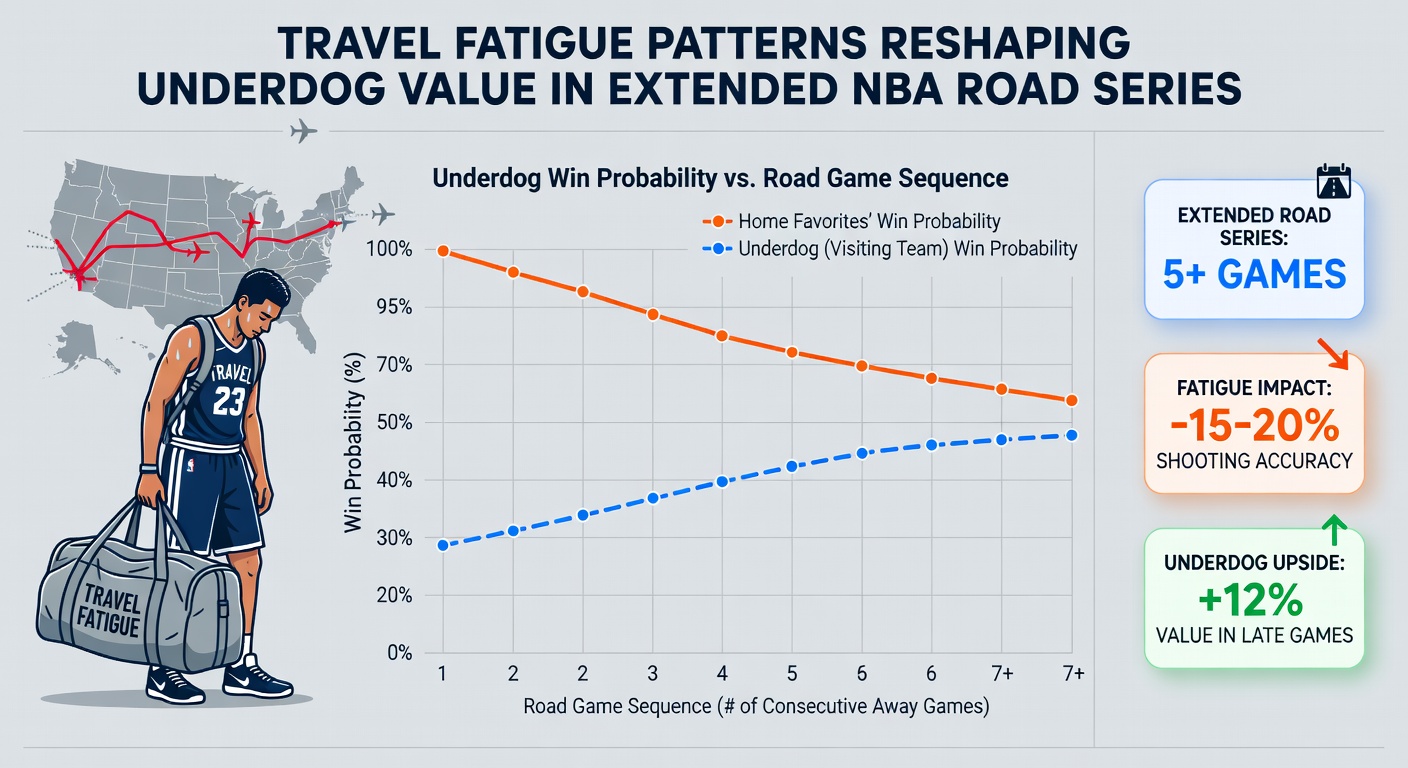
What's notable is how these patterns interact with series length. Shorter two-game road stands produce minimal deviation from baseline performance, whereas series extending to six or seven games amplify the effect. Data indicates that underdog moneyline payouts become more attractive in the later stages because market lines fail to fully account for the compounding impact of repeated travel and arena changes. Observers tracking these trends point to defensive rating drops of several points per 100 possessions as a reliable signal that influences totals markets in particular.
Regional and Conference Variations in Travel Impact
Eastern Conference clubs encounter different fatigue profiles compared to their Western counterparts because of shorter average flight distances, yet cross-country series still generate measurable edges for road underdogs. When Pacific Division teams visit Atlantic Division opponents over extended stretches, performance metrics reveal steeper declines in pace control and rebounding efficiency. Research reports from organizations such as the Australian Institute of Sport highlight how jet lag compounds with game frequency, creating windows where underdogs hold value even against statistically superior home sides.
Playoff formats in 2026 amplified these dynamics, as certain first-round series required teams to navigate back-to-back travel days between venues. Teams that managed rotations effectively still showed incremental drops in second-half production, which translated into adjusted totals and spread movements favoring the underdog side in later games. Those monitoring line movement note that sharp bettors target these spots after the midpoint of a series once initial public money has established inflated home favorites.
Conclusion
Travel fatigue patterns continue to influence NBA series outcomes in measurable ways that reshape underdog value throughout extended road trips. Objective performance data and schedule analysis demonstrate how these effects build over multiple games, creating opportunities in spreads, totals, and moneyline markets. As teams navigate increasingly dense playoff calendars, the relationship between road mileage and betting lines remains a consistent factor that rewards attention to granular metrics rather than surface-level records.