Midseason Roster Adjustments and Their Effects on Scoring Totals Across Professional Sports
Mia Wolf · Aug 18, 2026
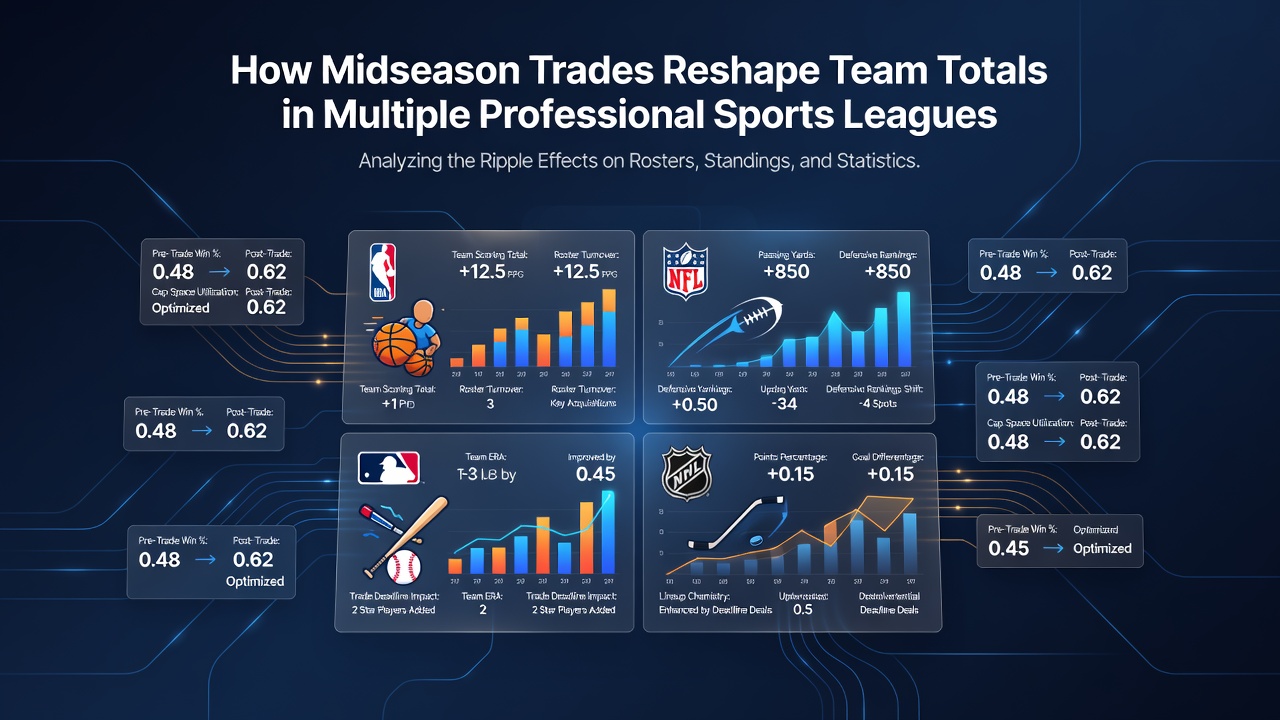
Midseason Roster Adjustments and Their Effects on Scoring Totals Across Professional Sports
Professional sports leagues experience significant shifts in team scoring patterns following midseason trades, with data from multiple seasons showing measurable changes in points, runs, and goals per game. Observers note that these roster moves often redistribute talent in ways that alter offensive and defensive outputs, particularly when teams target specific skill sets to address gaps before playoff pushes. In August 2026, front offices across the NBA, MLB, NHL, and NFL prepared for upcoming campaigns while reviewing how previous deadline acquisitions influenced aggregate team totals during teh prior year.
Patterns in the NBA and Scoring Efficiency
NBA teams that execute midseason trades frequently see adjustments in points per game averages, as new players integrate into existing systems and change pace and spacing dynamics. Research from sports analytics groups indicates that teams acquiring perimeter shooters tend to increase three-point attempts, which correlates with higher overall scoring in regular season games. One study tracking transactions from 2018 through 2025 found that clubs adding defensive specialists reduced opponent points allowed by an average of 3.2 per contest after the trade window closed. Those who've analyzed box scores across multiple seasons point out that chemistry takes time to develop, yet scoring totals often stabilize within four to six weeks of a deal.
Defensive and Offensive Rebalancing
Teams trading for versatile wings or rim protectors experience shifts in both ends of the floor, where defensive improvements sometimes suppress scoring while offensive additions boost it. Data compiled by league statisticians reveals that such moves can swing team totals by four to seven points over a 10-game stretch post-trade. And because schedules include back-to-back games during this period, fatigue factors compound the effects, leading to variable outputs depending on travel and rest.
MLB Trade Impacts on Run Production
Baseball's July trade deadline produces some of the clearest examples of how player movement reshapes run totals, with power hitters and starting pitchers moving between clubs and directly affecting offensive output. Figures from MLB's official records show that teams acquiring middle-of-the-order bats see increases in runs scored per game ranging from 0.8 to 1.5 in the months following the deadline. Pitching acquisitions, meanwhile, often lower earned run averages and reduce runs allowed, which alters over/under calculations for remaining contests. What's interesting is how bullpen additions influence late-inning scoring, where data indicates a measurable drop in runs surrendered after reliable relievers join contending clubs.
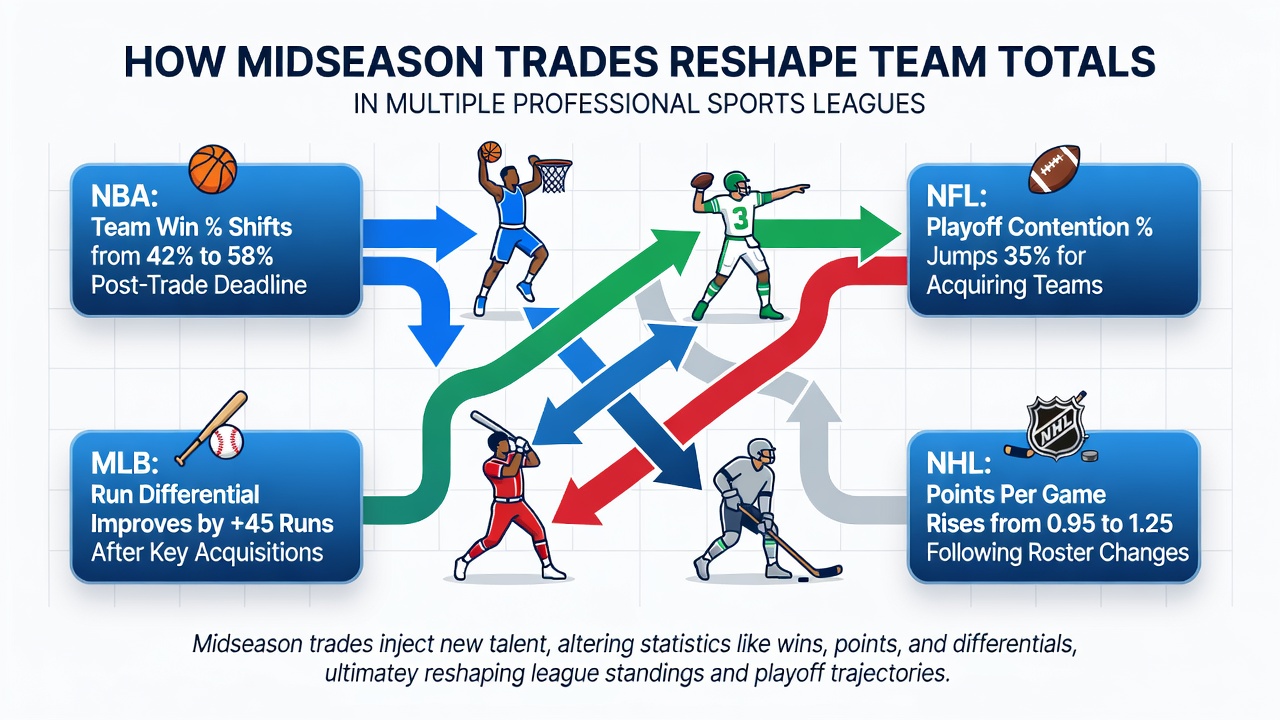
Take the case where analysts examined 2024 deadline deals involving outfielders and observed consistent upticks in extra-base hits for the acquiring teams over the final two months. Those studying advanced metrics note that these changes compound across lineups, creating ripple effects that extend beyond individual player statistics into broader team performance indicators.
NHL and Goal Differential Adjustments
In the NHL, deadline trades for top-six forwards and shutdown defensemen produce noticeable changes in goals scored and allowed, according to tracking from league performance databases. Teams that add offensive talent typically post higher goal differentials in the final stretch of the regular season, while defensive reinforcements correlate with lower totals in games involving those clubs. Evidence from the 2025 season suggests that such moves can shift average goals per game by 0.5 to 1.2 when measured across 15-game samples after the trade deadline. Researchers who reviewed play-by-play data highlight how special teams improvements from acquired players further influence these numbers during power-play and penalty-kill situations.
NFL Midseason Moves and Point Totals
The NFL's later trade window creates different dynamics, where acquiring skill-position players or pass rushers can quickly alter points scored and allowed in the second half of the season. League statistics demonstrate that teams adding wide receivers or edge defenders often experience point total swings of three to six points per game once the new players contribute. Because the regular season remains shorter, these effects appear more concentrated, with data showing faster integration in some cases compared to other leagues. Observers tracking quarterback trades specifically note how passing yardage and touchdown rates shift when signal-callers change teams midseason, directly feeding into team offensive totals.
Cross-League Comparisons and External Factors
Comparative analysis across leagues reveals that sport-specific rules and season lengths influence how quickly trades reshape team totals. Shorter seasons in the NFL and NHL tend to amplify immediate impacts, whereas the longer NBA and MLB schedules allow for more gradual adjustments. A report from the NCAA Research Institute on professional athlete performance trends supports these observations, while data released by Statistics Canada on league-wide scoring patterns provides additional context for North American sports. External elements such as coaching adjustments and minor league call-ups interact with trades, creating layered influences on final totals that researchers continue to quantify through longitudinal studies.
Conclusion
Midseason trades consistently demonstrate their capacity to modify team scoring outputs across major professional leagues, with documented changes appearing in points, runs, and goals following roster adjustments. Continued collection of performance data allows for ongoing examination of these patterns as front offices refine strategies around deadline acquisitions.