Fixture Congestion Reshapes Goal Expectation Models in European Soccer Leagues
Erik Hughes · Jun 25, 2026
Fixture Congestion Reshapes Goal Expectation Models in European Soccer Leagues
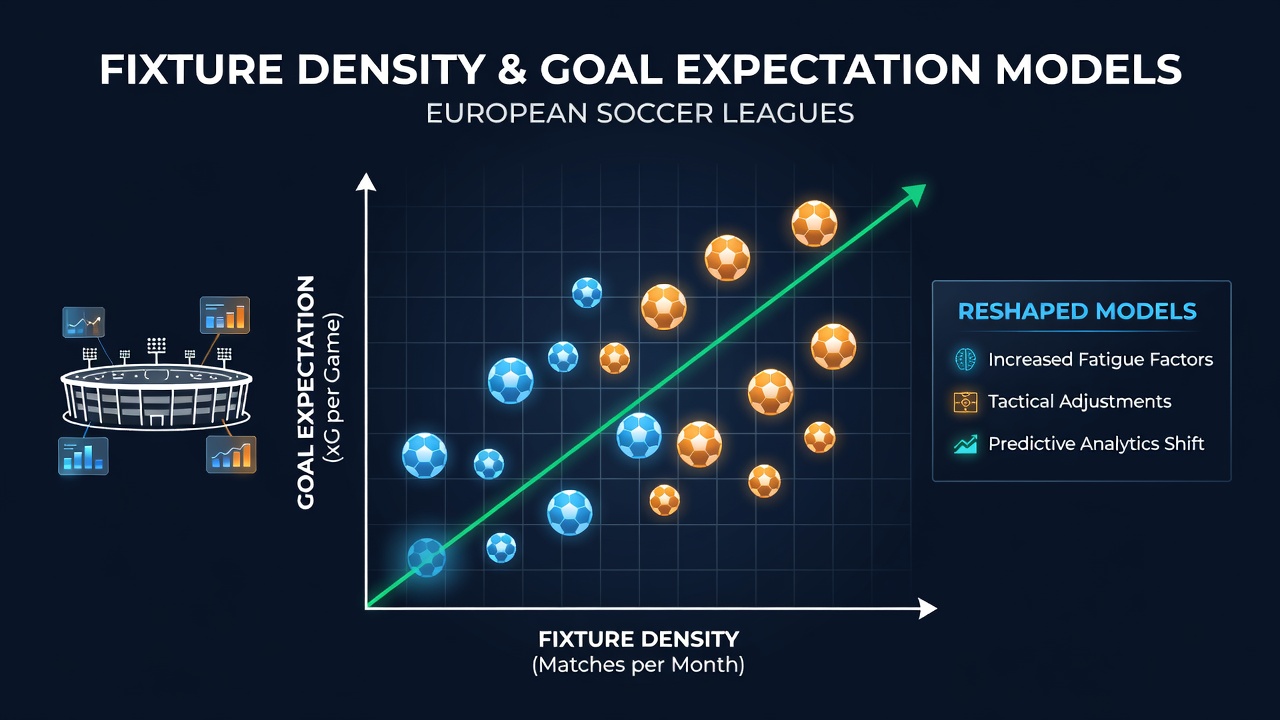
European soccer leagues face packed calendars that force clubs into sequences of matches with minimal recovery time between fixtures, and analysts adjust goal expectation models to account for these patterns because reduced rest alters player output and scoring rates across competitions. Data from major leagues shows teams encounter up to three matches per week during peak periods, which shifts expected goals calculations away from baseline season averages toward lower totals when fatigue accumulates. Observers note that models incorporating fixture density metrics produce more accurate projections than those relying solely on historical scoring averages, since congestion influences both attacking efficiency and defensive organization in measurable ways.
Defining Fixture Density in League Contexts
Fixture density refers to the concentration of competitive matches within short time frames, and leagues such as the Premier League, Bundesliga, and Serie A track these schedules through official calendars released by governing bodies. Researchers calculate density using intervals between games, total matches per month, and overlap with international windows, while data sets from 2024 through 2026 reveal spikes during autumn and spring blocks. European competitions add further layers when clubs advance in UEFA tournaments, creating midweek fixtures that compound domestic demands and force coaches to rotate squads more aggressively than in less congested periods.
Analysts at institutions like the University of Groningen have examined how these schedules interact with travel distances, and findings indicate that teams covering greater cumulative kilometers between matches exhibit steeper declines in high-intensity running metrics tracked by GPS systems. Such measurements feed directly into revised goal models that weight recent form against rest differentials rather than treating all fixtures as equivalent events.
Effects on Player Metrics and Team Scoring
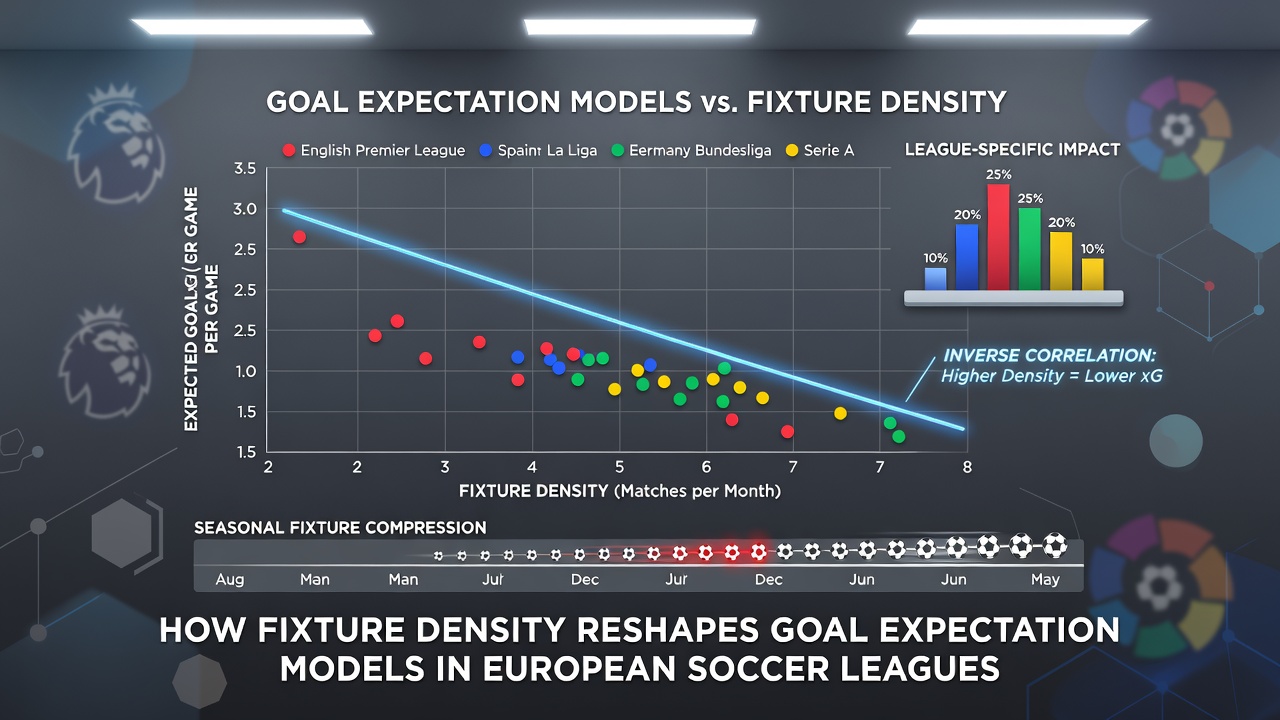
Repeated matches without adequate recovery reduce sprint distances and passing accuracy, according to performance data compiled by Opta and similar tracking providers, and these changes translate into fewer shots on target per 90 minutes for squads under heavy loads. Defensive units also show increased errors in build-up play during congested stretches, which elevates opponent expected goals values in adjusted simulations. Models that previously applied uniform Poisson distributions for goal tallies now incorporate regression coefficients tied to days since the last match, producing tighter confidence intervals around projected outcomes.
One study released by the German Football Association in 2025 documented a 12 percent drop in total goals per game for Bundesliga sides playing three matches in eight days compared with sides on standard seven-day cycles, and similar patterns appear in La Liga records during winter periods. These empirical shifts prompt model builders to layer in variables for squad depth and rotation frequency, because teams with larger rosters maintain closer to baseline scoring rates while thinner squads experience sharper drops.
Model Adjustments and Predictive Accuracy
Goal expectation frameworks evolve by integrating machine learning components that process fixture density as a dynamic input rather than a static adjustment, and practitioners test these updates against historical match logs from 2018 onward to measure improvements in log-loss metrics. Regression techniques now assign negative weights to back-to-back fixtures and positive weights to longer rest intervals, while interaction terms capture how density compounds with travel or weather variables. The result produces forecasts that better align with observed scoring distributions during high-density months such as December and March.
League-wide data released through UEFA technical reports in early 2026 highlights that clubs advancing deep into Champions League knockout stages post lower domestic goal outputs in the weeks immediately following European ties, prompting analysts to apply temporary dampeners to attacking ratings within their models. These refinements reduce overestimation errors that plagued earlier versions during congested calendar windows and improve calibration across both over/under markets and individual player prop lines.
League-Specific Patterns Emerging in 2026
June 2026 approaches with the expanded FIFA World Cup schedule already influencing pre-tournament club calendars, and European domestic leagues have compressed spring fixtures to accommodate national team preparations. This compression creates a final block of dense matches before the international break, and preliminary tracking data shows elevated rotation rates that further modify goal expectation baselines. Serie A and Ligue 1 records from comparable periods indicate that teams with European commitments post reduced expected goals when entering this compressed phase, whereas sides focused solely on domestic play maintain steadier outputs.
Cross-league comparisons reveal that the Bundesliga experiences the most pronounced adjustments because its 34-match season overlaps with additional cup and European obligations more frequently than narrower schedules elsewhere. Modelers therefore apply league-specific multipliers derived from multi-year data sets rather than a single universal congestion factor.
Conclusion
Fixture density continues to drive refinements in goal expectation models used across European soccer analytics, as empirical evidence from league records and performance tracking demonstrates consistent impacts on scoring rates under congested conditions. Updated frameworks that embed rest intervals, rotation patterns, and travel loads deliver improved alignment with actual match outcomes, and ongoing calendar pressures through 2026 ensure these adjustments remain central to predictive work in the sport.