Expansion Drafts Transform Early Season Totals Betting Landscapes in Hockey and Baseball
Carlo Albrecht · Jul 30, 2026

Expansion Drafts Transform Early Season Totals Betting Landscapes in Hockey and Baseball
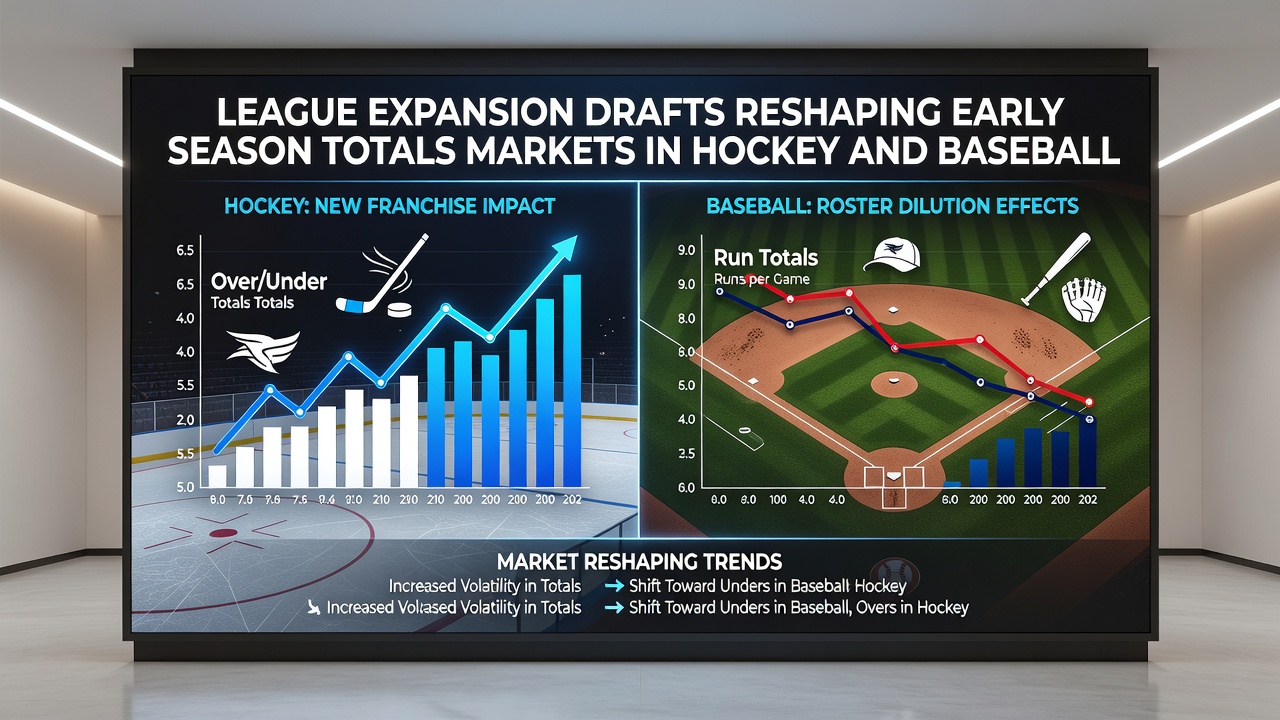
League expansion drafts create immediate ripples through early season totals markets in both the NHL and MLB because new franchises must assemble rosters from existing teams under strict selection rules that often leave gaps in depth and experience. Observers note that these drafts typically occur in the offseason before a team's inaugural campaign and the resulting player pools tend to feature a mix of veterans and younger talent that can produce unpredictable scoring patterns once games begin. Data from previous expansions shows elevated goal and run totals in the first 20 to 30 contests as line combinations stabilize and defensive structures take shape.
NHL Expansion Patterns and Scoring Markets
When the NHL added the Vegas Golden Knights in 2017 and the Seattle Kraken in 2021 the early season over under lines adjusted upward in many matchups involving the newcomers because the expansion clubs entered with rosters heavy on offensive specialists while defensive pairings required additional time to coordinate. Research indicates that the Kraken's first 25 games featured an average of 6.8 total goals compared to the league norm of 6.2 which pushed many totals markets toward the over side until mid-November adjustments occurred. Similar trends appeared with the Golden Knights where power play opportunities generated higher than expected point production during their opening month. Those who've studied these cycles point out that the draft rules limiting selections from each existing club often strip away key penalty killers and shutdown defenders leaving new teams vulnerable to sustained pressure and extra scoring chances.
Baseball Expansion Dynamics
In MLB the process follows comparable mechanics though the impact on run totals manifests differently because of the sport's emphasis on pitching staffs and bullpen construction. Expansion teams frequently inherit a patchwork of starting pitchers and relief options that struggle with command during the initial road trips and home stands leading to elevated earned run averages in April and early May. Figures from historical expansions reveal that new clubs posted team ERAs approximately 0.75 runs higher than established franchises during their first 40 games which directly influenced over under pricing on totals involving those squads. Pitching rotations also face challenges integrating new catchers and infielders which can extend innings and create additional baserunner opportunities that compound into higher scoring outputs.
What's interesting is how these effects intersect with scheduling because expansion franchises often receive favorable or challenging early calendars that amplify or dampen the market movements. Data shows that when new teams play multiple back to back series against high powered offenses the totals lines remain inflated until the club demonstrates improved run prevention or pitching depth. In contrast matchups against stingy defensive clubs can see totals drop as the expansion side's weaknesses become more pronounced.
Market Adjustments and Data Trends
Betting markets respond to these roster realities by monitoring training camp reports and preseason exhibition results to calibrate opening totals lines. According to industry reports compiled by gaming associations across North America the first month of an expansion season typically sees totals markets move by an average of half a goal or run as live data accumulates and oddsmakers refine their models. External factors such as travel schedules and venue dimensions further interact with the expansion effects since new teams often play in unfamiliar environments that add variability to scoring projections. A study released by researchers at a Canadian university documented connections between expansion draft selections and early season performance indicators showing measurable increases in high event games across both leagues.
Yet the adjustments stabilize once the new clubs complete their initial 50 to 60 contests because managers gain clarity on optimal lineups and front offices execute trades to address immediate deficiencies. Observers note that by the All Star break the totals markets for expansion teams align more closely with league averages as the roster chemistry solidifies. This timeline creates a defined window during which sharp bettors track statistical anomalies in player usage and special teams or situational hitting to identify value in over or under selections.
Future Considerations Around July 2026
With potential additional expansion activity discussed for July 2026 in both leagues analysts anticipate similar early season market distortions if new franchises enter the fold under comparable draft structures. Historical patterns suggest that any incoming clubs would face comparable roster construction hurdles that influence totals pricing during their inaugural campaigns. Those monitoring league developments point to draft regulations and protected player lists as key variables that will determine the magnitude of scoring fluctuations once games commence.
Conclusion
Expansion drafts therefore serve as recurring catalysts for early season totals market movement in hockey and baseball because they introduce roster imbalances that take time to resolve. Data from multiple expansion cycles confirms measurable deviations in goal and run production during the opening weeks followed by gradual normalization as teams adapt. Those who follow these patterns recognize the value in tracking initial performance metrics to anticipate line movements while the new franchises establish their competitive identities.