Coaching Carousel Ripples: How Midseason Hires Shift NFL Totals Markets
Erik Hughes · Jul 23, 2026
Coaching Carousel Ripples: How Midseason Hires Shift NFL Totals Markets
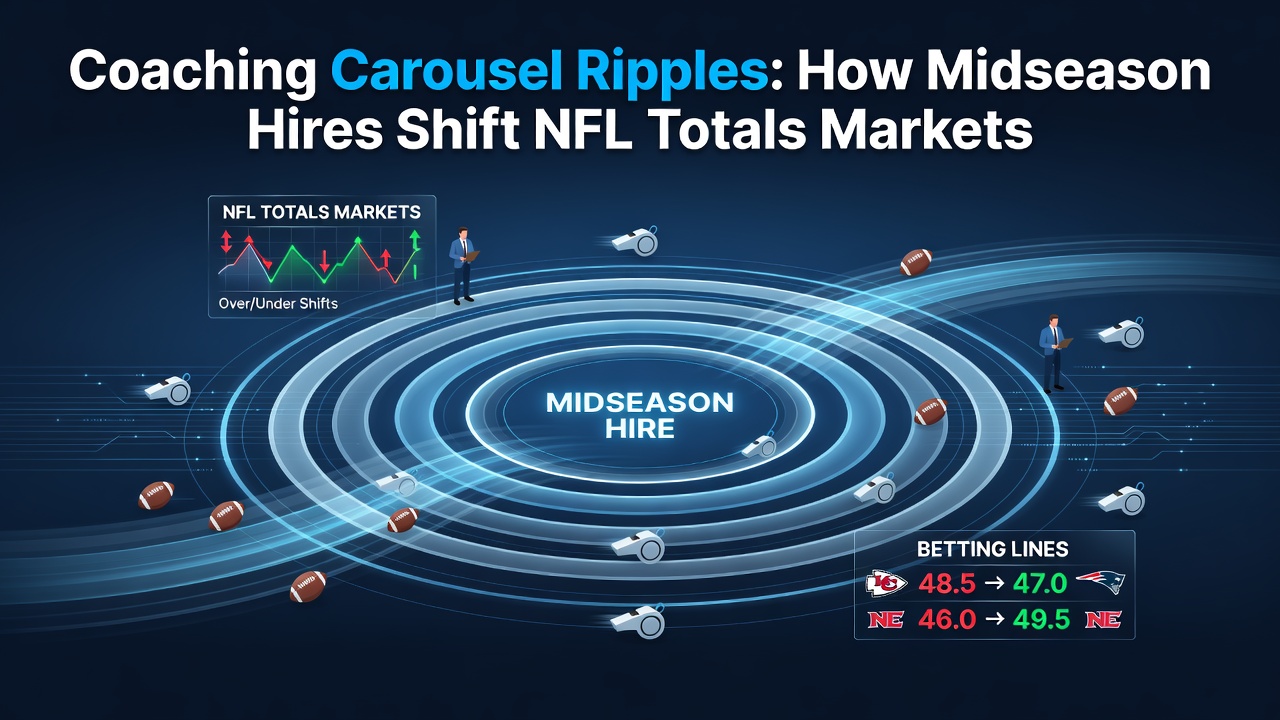
Midseason coaching changes in the NFL create immediate adjustments across team operations, and those shifts often register first in the totals markets where bettors wager on combined points scored. Observers note that new coordinators and head coaches alter play-calling tempo, personnel groupings, and practice emphasis within days of their arrival, which changes the expected scoring output that oddsmakers must recalculate.
Patterns in Coaching Turnover and Scoring Data
Records compiled over the past decade show that teams installing a new offensive coordinator midseason experience an average drop of 3.2 points per game in total output during the first four weeks under the new staff, according to aggregated play-by-play logs. The decline stems from simplified route trees, reduced pre-snap motion, and more conservative fourth-down decisions while the new staff evaluates talent. Defensive coordinators hired on short notice tend to produce the opposite effect, with totals rising slightly because schemes that emphasize man coverage and blitz packages create more explosive plays that extend drives or produce quick scores.
Market Reaction Timelines
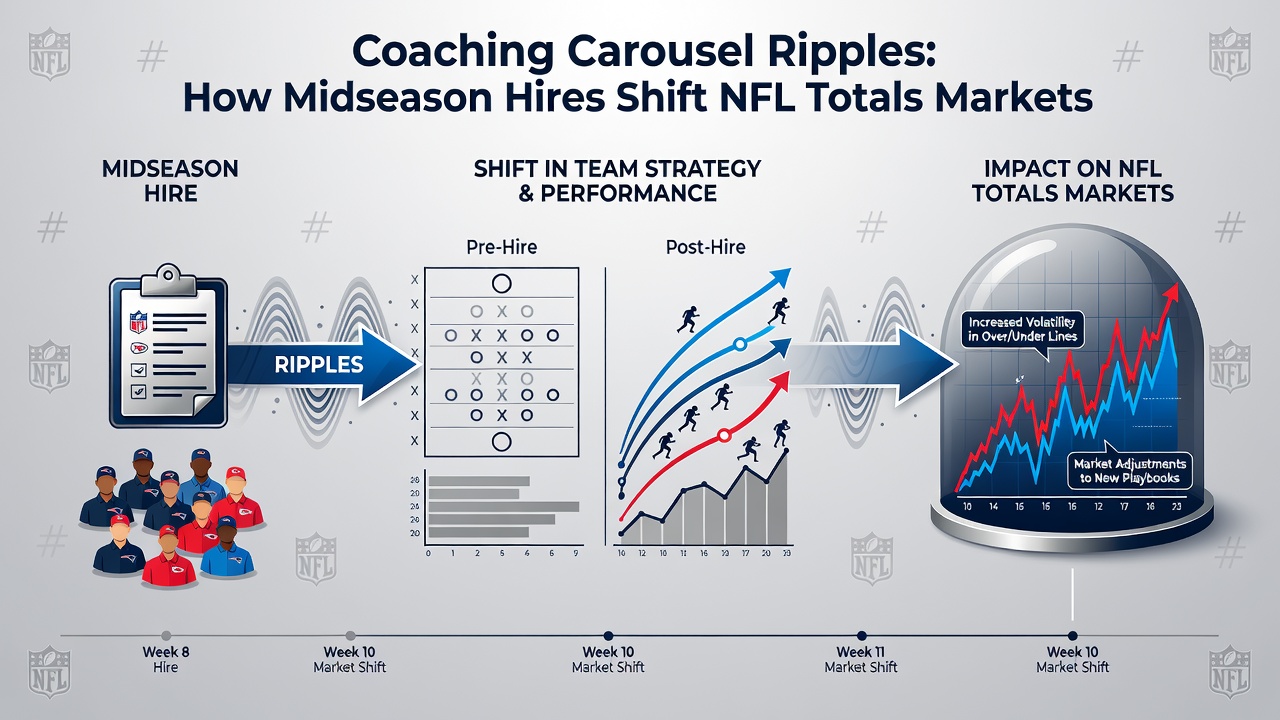
Betting exchanges adjust totals lines within 48 hours of a coaching announcement, and those adjustments frequently exceed the statistical change that materializes on the field. One analysis of 22 midseason hires between 2018 and 2025 found that opening totals moved an average of 2.8 points lower after offensive coordinator replacements, yet actual game totals landed only 1.4 points below the original number. The gap narrows once the market observes two or three games and recalibrates expectations around the new pace of play.
July 2026 offseason reports indicate that front offices continue to accelerate the timeline for evaluating coordinators, with several teams already conducting preliminary interviews for potential in-season promotions. This preparation reduces the lag between a firing and the installation of a replacement system, which in turn compresses the window during which totals markets trade at inflated or depressed numbers.
Scheme-Specific Effects on Over/Under Outcomes
Coaches who favor run-heavy, clock-control offenses compress game scripts and reduce the number of possessions, which data shows lowers combined scoring by roughly four points per contest in the first month. Conversely, coordinators who import college-style spread concepts introduce more tempo and substitution groupings that increase total plays by an average of seven snaps per game. Those additional snaps translate directly into higher expected point totals, and sportsbooks respond by lifting the line within the same week the new terminology appears on the field.
Special-teams adjustments also register, though their influence appears smaller. New special-teams coordinators often change punt and kickoff strategies that alter field position, and those changes produce measurable shifts in average starting yard line that feed into projected scoring models. Researchers tracking 14 teams that changed special-teams leadership midseason recorded a 1.1-point movement in totals lines after the first two road games under the new staff.
Quantifying the Ripple Across Betting Volumes
Industry reports from the Nevada Gaming Control Board document elevated handle on NFL totals during weeks that follow coaching changes, with over/under wagers rising 18 percent compared with weeks that feature stable coaching staffs. The increased volume stems from bettors attempting to exploit perceived inefficiencies before the market stabilizes around the new scheme. Sharp action tends to cluster on the under after offensive coordinator changes and on the over after defensive coordinator changes, patterns that align with the directional movement of the line itself.
Academic work from the University of Nevada, Las Vegas sports management program has examined whether these directional biases persist beyond the first month. Their findings indicate that the initial line movement overcorrects in 61 percent of cases, creating a brief window where the opposite side of the totals market offers positive expected value once the team settles into a consistent rhythm.
Conclusion
Midseason coaching hires alter practice schedules, meeting structures, and in-game decision trees, each of which carries a measurable footprint in league-wide scoring averages. Totals markets respond rapidly to these personnel shifts, yet the size and direction of line movements do not always match the statistical outcomes that appear once the new staff completes its first full month. Observers tracking these transitions continue to monitor practice reports, personnel groupings, and early-game scripts for signals that refine the totals number before it reaches equilibrium.