Call-Up Cascades: How National Team Selections Shift Domestic League Betting Lines
Mia Wolf · Jun 23, 2026
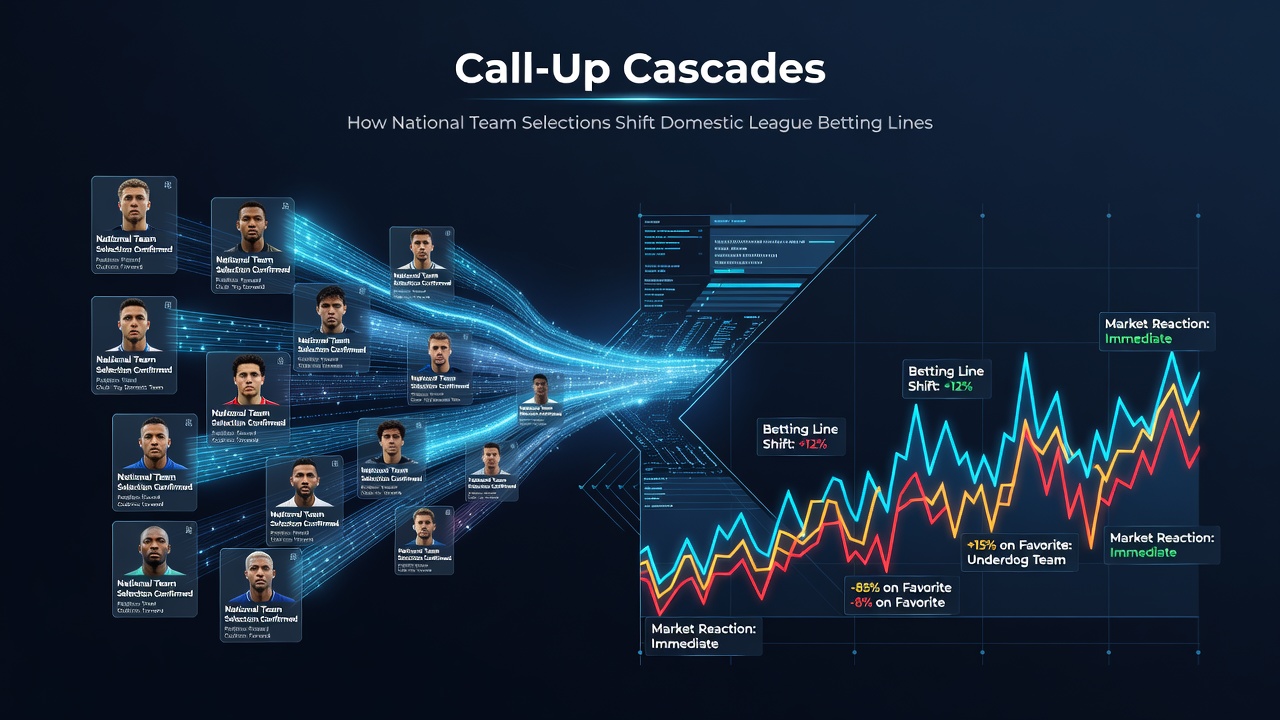
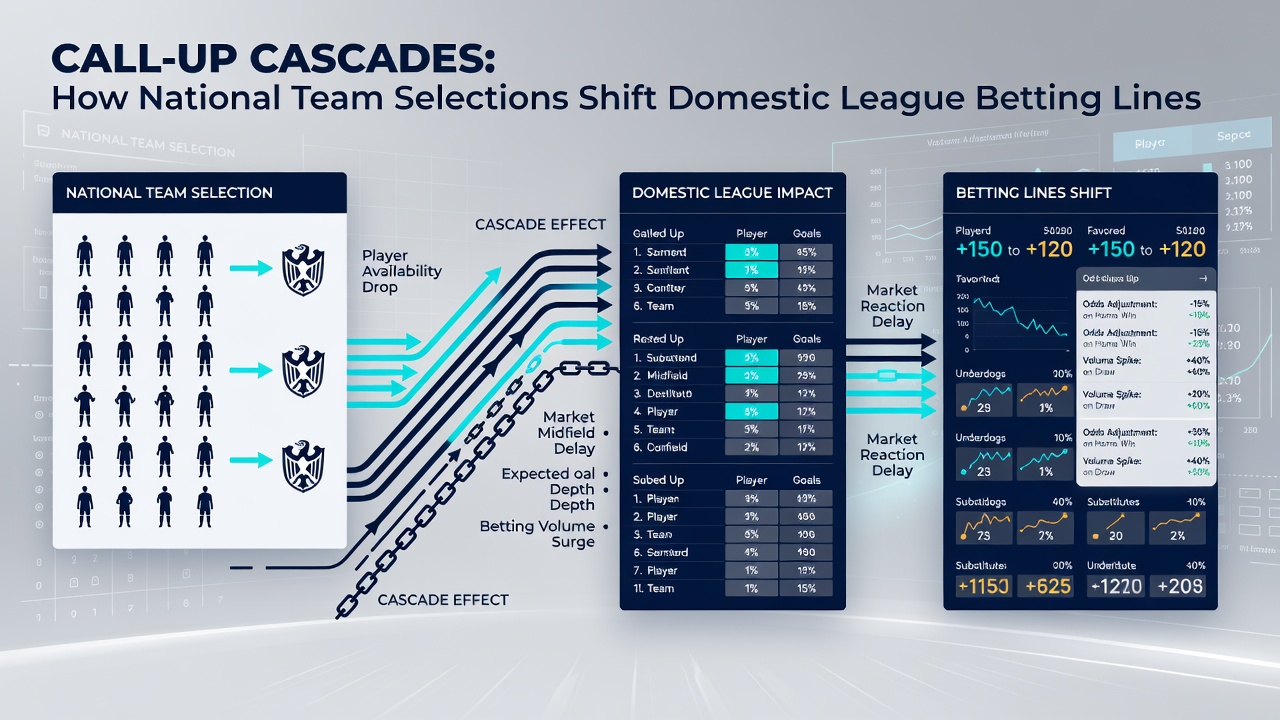
Call-Up Cascades: How National Team Selections Shift Domestic League Betting Lines
National team call-ups create measurable adjustments across domestic league betting markets as clubs lose key personnel for international windows and bookmakers recalibrate spreads, totals, and player props accordingly. Data from major European and South American leagues shows consistent line movements during FIFA and confederation dates, particularly when star players depart for qualifiers or preparatory matches ahead of the 2026 World Cup cycle.
Call-Up Timing and Market Reactions
Announcements typically arrive two to three weeks before international fixtures, giving oddsmakers time to assess squad depth and injury reports while bettors monitor training updates. In June 2026, several leagues face overlapping windows that coincide with final World Cup preparations, prompting sharper movements in goal totals and win probabilities for affected clubs. Observers note that markets often open with modest shifts before stabilizing once lineups confirm absences, yet volatility spikes again when late withdrawals occur due to fitness concerns.
Player Absence Effects on Specific Markets
Teams missing creative midfielders or primary scorers see over/under lines drop by half a goal or more in many documented cases, while moneyline odds widen against the depleted side. Research from league performance databases indicates that defensive units suffer similar adjustments when center backs receive call-ups, pushing spreads in favor of opponents. These patterns emerge across multiple competitions because replacement players alter both offensive output and set-piece dynamics in measurable ways.
Regional Variations in Line Adjustments
European domestic leagues exhibit tighter responses to call-ups compared with South American competitions where travel distances amplify fatigue upon return. Figures from CONMEBOL-affiliated clubs reveal larger total adjustments during Copa America qualifying periods, whereas UEFA nations often experience more contained movements due to denser fixture schedules that allow quicker recovery. Analysts tracking these differences point to squad rotation policies as a moderating factor that cushions some impacts in top-tier English, Spanish, and German clubs.
North American and Asian leagues demonstrate distinct responses tied to smaller roster sizes and greater reliance on individual contributors. MLS markets frequently widen spreads by one goal when designated players depart for national team duty, according to historical data compiled by league statistical services. Australian A-League records show comparable total reductions during Asian Cup cycles, reflecting limited depth that forces tactical overhauls.
Return Windows and Secondary Shifts
Post-international recovery periods trigger additional line movements as clubs reintegrate players who logged heavy minutes abroad. Evidence from performance tracking platforms shows elevated unders in the first domestic match back, particularly when travel crosses multiple time zones. Bookmakers adjust player prop markets accordingly, lowering goal and assist expectations for those returning from duty while elevating values for squad members who remained at club level.
Data Patterns Across Seasons
Longitudinal studies of Premier League and Serie A fixtures indicate that call-up affected matches produce goal totals 0.4 lower on average than non-affected counterparts, with spreads reflecting the same directional bias. Similar metrics from Brazilian Série A and Argentine Primera División confirm parallel effects scaled to local roster constraints. These consistent outcomes allow oddsmakers to build predictive models that anticipate adjustments without requiring reactive over-corrections.
Industry reports from organizations such as the FIFA Technical Study Group document how national team windows redistribute workload across club seasons, influencing both short-term betting lines and longer-term roster planning. Additional analysis from the Canadian Sport Institute highlights fatigue correlations that extend beyond the immediate match and into subsequent league rounds.
Conclusion
Call-up cascades generate predictable yet nuanced movements in domestic league betting lines as markets incorporate personnel changes, recovery demands, and regional depth variations. Data across multiple continents demonstrates that these shifts occur systematically around international dates, including the June 2026 window tied to World Cup preparations, allowing informed observers to track patterns through established performance indicators and official league records.