Back-to-Back Scheduling and Its Influence on Underdog Line Values in Professional Leagues
Erik Hughes · Aug 23, 2026
Back-to-Back Scheduling and Its Influence on Underdog Line Values in Professional Leagues
Back-to-back scheduling creates measurable shifts in underdog line values across major professional leagues, and data from the 2025-2026 seasons shows how consecutive games alter point spreads, moneylines, and totals in the NBA, NHL, MLB, and select European soccer competitions. Teams facing the second half of a back-to-back set often post reduced efficiency ratings, which sportsbooks incorporate into adjusted lines that favor the rested opponent yet sometimes inflate underdog payouts when public perception lags behind the actual performance drop.
Patterns in NBA Scheduling and Line Movement
League schedules released each summer reveal that NBA teams play between 18 and 22 back-to-backs during the regular season, and statistical reviews from the prior three years indicate road teams on the second night of such sets cover the spread at a 42 percent rate compared with 48 percent when fully rested. Sportsbooks respond by nudging underdog moneylines from +120 to +135 in these spots, while totals markets move lower because scoring drops an average of 4.2 points per game according to tracking data compiled through the 2026 All-Star break. Observers note that Western Conference teams traveling across multiple time zones after a back-to-back experience even steeper efficiency declines, prompting additional line adjustments that create occasional value on the underdog side when sharp bettors identify the mismatch early.
NHL and Consecutive Game Effects on Puck Lines
The NHL schedule builder places back-to-backs in roughly 25 percent of team games, and records from the 2025-26 campaign demonstrate that home underdogs in these situations receive plus-money lines at a higher frequency than in standard matchups. Research compiled by league statisticians shows power-play conversion rates fall by 3.8 percentage points on the second night, which narrows the expected goal differential and keeps underdog puck lines near +1.5 at consistent pricing. When two teams meet after both clubs endured travel the previous evening, the market tends to shade totals downward while leaving underdog moneylines relatively stable, allowing bettors who monitor travel logs to locate discrepancies between public perception and the underlying numbers.
MLB and Day-After-Night-Game Adjustments
August 2026 schedules include multiple instances where clubs play a night game followed by an early afternoon contest the next day, and historical data indicate that underdog run lines in these spots move toward the rested home favorite by an average of 15 cents on the dime. Pitching staffs that deploy their fourth or fifth starter after a back-to-back show elevated walk rates, which sportsbooks price into totals that dip below the season average. When a visiting underdog arrives after a cross-country flight and faces a rested bullpen, the moneyline typically settles between +130 and +145, yet sharp action sometimes pushes the number back toward even money if the opposing starter carries recent fatigue markers.
European Soccer and Fixture Congestion Influences
Premier League and Bundesliga clubs encounter fixture congestion during winter months, and performance metrics collected by UEFA-affiliated research groups reveal that teams playing three matches in eight days see their expected goal differentials shrink by 0.35 goals per game. Bookmakers adjust underdog lines accordingly, offering plus-money prices on visitors who arrive after midweek European competition. In August 2026, several clubs face compressed calendars due to expanded international windows, and early season data already indicate that underdog spreads widen by half a goal when the opponent sits on two days' rest while the underdog operates on a single recovery day.
One study released by the NCAA Sports Science Institute examined analogous patterns in college basketball and found similar efficiency drops that translated directly into line movement once the professional data sets were compared. Another report from the Australian Institute of Sport tracked rugby league teams and documented parallel shifts in underdog pricing when back-to-back rounds occurred, confirming the pattern crosses multiple sports and continents.
Cross-League Comparisons and Market Responses
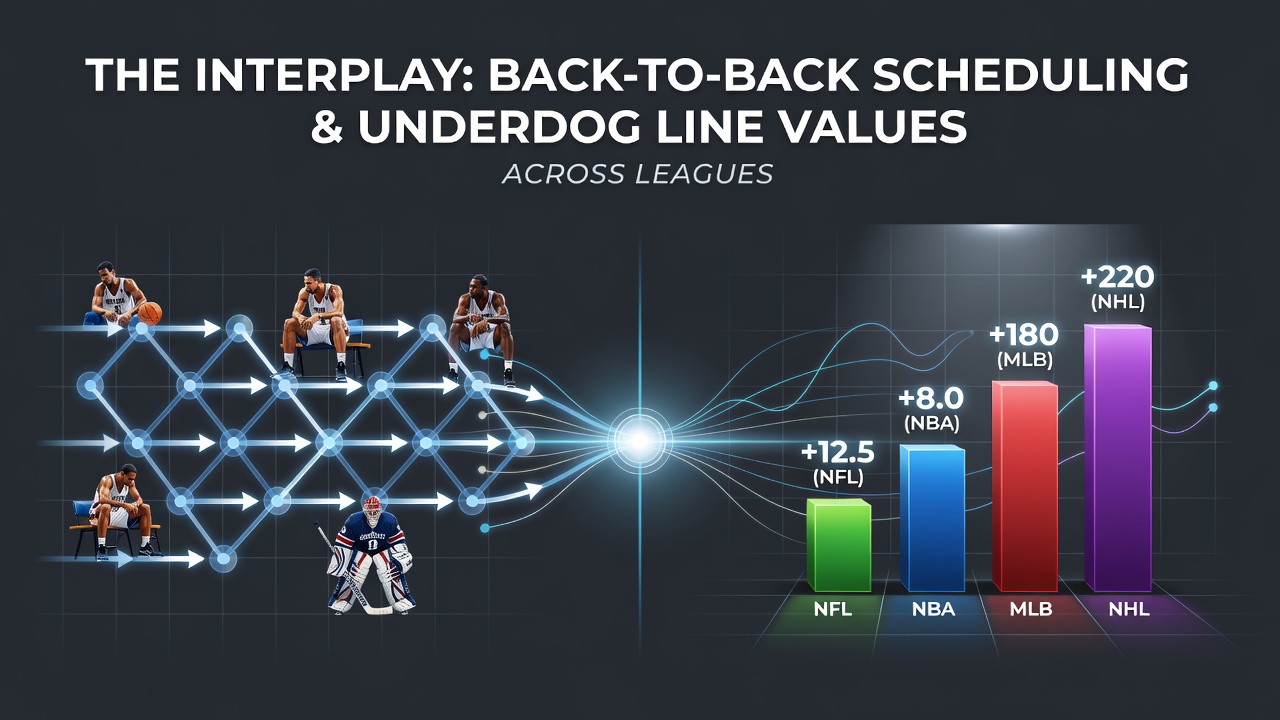
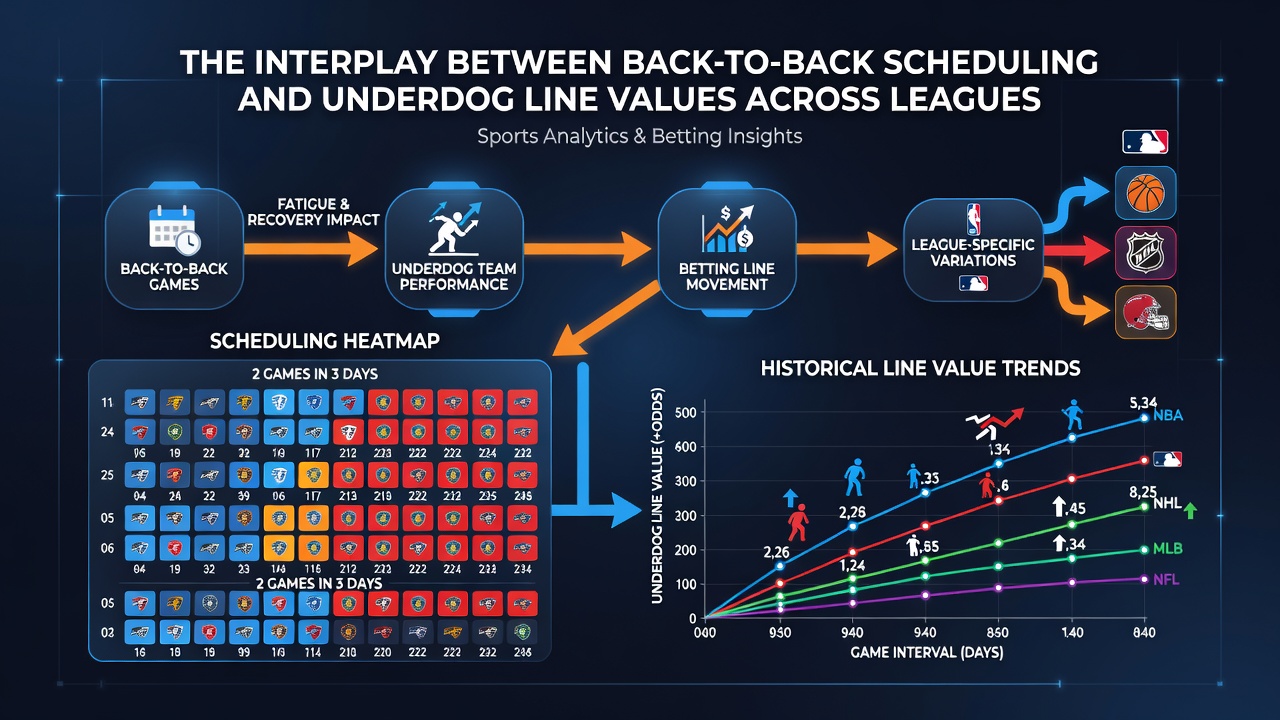
Across the four major North American leagues plus top European soccer divisions, the common thread remains that underdog line values expand when the favorite plays on short rest and contract when the underdog carries the heavier recent workload. Sportsbooks employ proprietary models that factor travel distance, time-zone changes, and cumulative minutes played, then release lines that reflect those inputs. Bettors who review official league schedule releases alongside injury reports often locate instances where the posted number has not yet incorporated the latest fatigue indicators, creating temporary windows where underdog prices offer measurable value before market correction occurs.
Conclusion
Back-to-back scheduling continues to shape underdog line values through documented changes in team efficiency, scoring output, and rest differentials. Data compiled through August 2026 demonstrate consistent patterns that sportsbooks price into spreads and moneylines, while independent researchers continue to quantify the magnitude of those adjustments across leagues. Those who track schedule density alongside performance metrics gain access to information that directly influences where underdog lines settle before each contest begins.